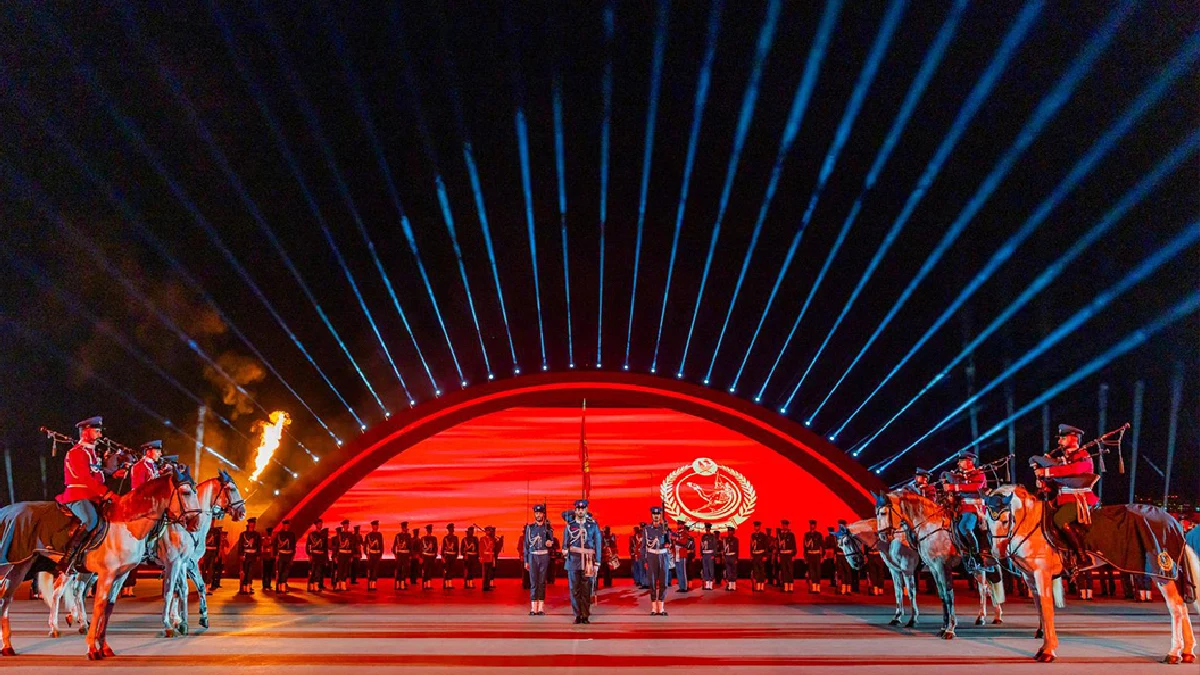
Under the patronage of HE Minister of Interior and Commander of the Internal Security Force (Lekhwiya), Sheikh Khalifa bin Hamad bin Khalifa Al-Thani, the first edition of the Doha International Music and Marching Festival (Doha Tattoo) made its debut on Tuesday.
The opening event was attended by HE Chief of Staff of the Qatari Armed Forces, Lieutenant General (Pilot) Jassim bin Mohammed Al Mannai, alongside senior state officials.
The opening marked a notable Qatari evening, as Doha added a new chapter to its cultural and artistic journey, highlighting military music as a shared cultural language that brings nations together.
Organised by the Ministry of Interior in collaboration with Visit Qatar, the Doha Tattoo Festival runs until December 20, bringing together distinguished regional and international military bands for a global celebration of military music and marching traditions.
The programme features military band performances in a visually engaging setting that combines military discipline with artistic expression, uniting sound and movement as Eastern and Western cultures converge at Katara Cultural Village.
Participating bands include Qatari ensembles from the Ministry of Defence, the Ministry of Interior, the Amiri Guard and the Internal Security Force “Lekhwiya”, alongside bands from the Sultanate of Oman, the Hashemite Kingdom of Jordan, the United Kingdom, the United States of America, the Republic of Turkiye and the Republic of Kazakhstan.
The bands performed pieces inspired by global military music traditions, celebrating rhythm, culture, and unity in a setting that fosters cultural exchange and honours long-standing military customs, reflecting the warmth, peace, and security that characterise events hosted in Doha.
The festival opened with a performance by the Internal Security Force “Lekhwiya” Band, presenting a programme of national military compositions delivered through coordinated rhythms and structured formations. The performance reflected the band’s strong collective cohesion and was met with positive audience engagement for its celebratory character and national significance. The presentation highlighted the role of military music within formal protocol and its contribution to morale and ceremonial occasions.
The Jordanian Armed Forces Band, joined by the Silent Drill Team of the Royal Jordanian Guard and the Jordanian Circassian Guard, presented a performance rooted in long-standing military tradition. The programme featured national and traditional compositions, complemented by organised marching sequences and coordinated weapon drills, offering a formal display that reflected the depth and continuity of Jordan’s military heritage.
The Omani Royal Guard Military Band delivered a performance that showcased the Sultanate’s military musical identity through a selection of national and military compositions. The programme highlighted the balanced use of brass instruments and rhythmic coordination, creating a presentation that reflected Oman’s cultural character and was well received by the audience.
Representing the United Kingdom, the Central Band of the Royal Air Force performed alongside the King’s Colour Squadron and the Royal Air Force Pipes and Drums. The programme included classical military compositions and national pieces, presented through carefully coordinated musical arrangements and ceremonial movement, reflecting the United Kingdom’s established military music tradition.
The Qatari Armed Forces Band presented a programme of national and military compositions performed through structured formations and coordinated brass arrangements. The performance reflected the band’s role in national and official events and its contribution to reinforcing values of order, commitment and national pride, while presenting the cultural dimension of the Qatari Armed Forces.
A joint pipes and drums performance brought together ensembles from Qatar, the Sultanate of Oman, the Hashemite Kingdom of Jordan and the United Kingdom. Featuring 140 pipers performing in a unified formation, the presentation highlighted the collective nature of military music and its ability to convey messages of cooperation and shared purpose.
The United States Air Force Honour Guard Band presented a performance combining musical elements with silent drill movements. The presentation focused on coordinated formations and ceremonial precision, offering a distinctive display that was met with strong audience appreciation.
The Turkish Gendarmerie Band and the Mehter Band presented a programme that reflected one of the oldest military music traditions in the world. Featuring traditional and contemporary compositions performed with brass instruments and structured formations, the presentation highlighted the historical depth of Turkiye’s military musical heritage.
The Band of the Irish Guards delivered a performance combining traditional and modern musical selections. The programme featured brass and woodwind arrangements supported by organised marching formations, creating a refined presentation that resonated well with the audience.
The Honour Guard of the Ministry of Defence of the Republic of Kazakhstan and the Central Military Band of the Armed Forces of the Republic of Kazakhstan presented a programme that blended traditional and modern musical elements. The performance featured coordinated instrumental sections and structured formations, reflecting the cultural role of military music within Kazakhstan’s armed forces.
The first day of the festival concluded with a performance by the Ministry of Interior Band, represented by the Police Academy Drill Team. The presentation combined silent marching, musical accompaniment and coordinated weapon drills, including formations spelling the word “Doha” on the field. The programme included national and international musical selections, reinforcing the role of military music as a platform for cultural representation and engagement.
In addition to musical performances, the festival featured a theatrical Qatari narrative titled The Tale of Jassim, depicting the evolution of life in Qatar from the desert to the sea and onward to modern Doha. Using visual effects, camels and traditional boats, the production traced the journey of its protagonist from heritage to the future, concluding with a unifying musical moment symbolising Doha as a meeting point for cultures and artistic expression.
The military tattoo tradition originated in Europe as an evening signal instructing soldiers to return to their barracks. Over time, this practice evolved into organised musical performances, and by the twentieth century became a structured artistic event combining marching, music and ceremony. The Royal Edinburgh Military Tattoo, first held in 1950, marked a defining moment in this evolution, paving the way for similar festivals worldwide that celebrate military heritage and cultural diversity.