Evacuation and Safety Guidelines for Educational Institutions in Qatar
March 24, 2026 | 09:24 AM
The Ministry of Interior (MOI) has issued evacuation and safety guidelines for educational institutions, emphasizing that adherence to safety procedures represents a shared responsibility and helps ensure a safe environment for students, teachers, and administrative staff. The guidelines outline important procedures to follow before emergencies, during emergency alerts, and throughout evacuation processes in schools, kindergartens, and universities.
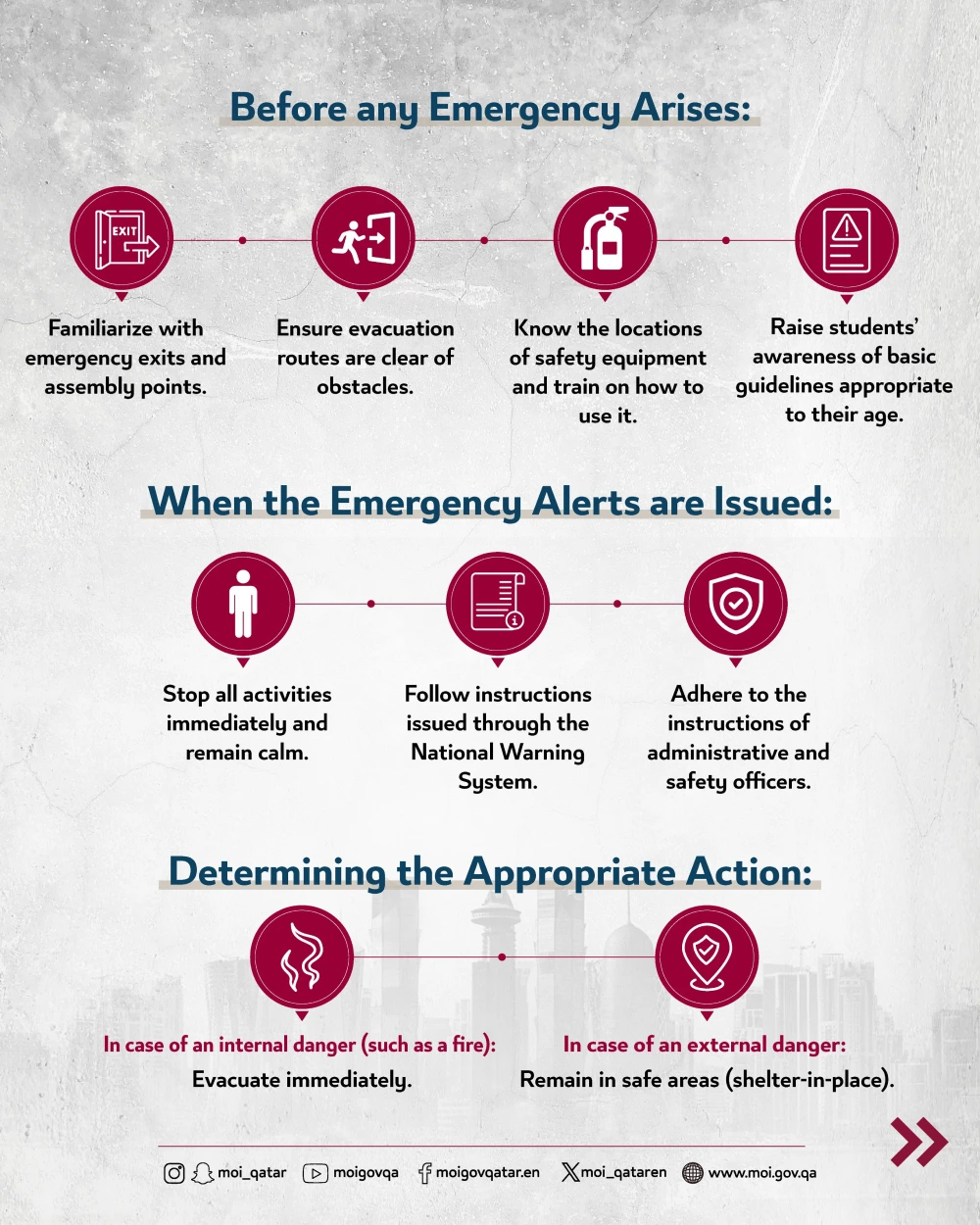
Before Any Emergency Arises Educational institutions are advised to familiarize students and staff with emergency exits and assembly points. Evacuation routes must always be kept clear of obstacles, and the locations of safety equipment should be known along with proper training on how to use them. Institutions should also raise students’ awareness of basic safety guidelines appropriate to their age groups.
When Emergency Alerts Are Issued When emergency alerts are issued, all activities should be stopped immediately while remaining calm. Everyone should follow instructions issued through the National Warning System and adhere to directions from administrative and safety officers.
Determining the Appropriate Action The guidelines explain that the response depends on the type of danger: In case of an internal danger such as a fire, immediate evacuation is required. In case of an external danger, students and staff should remain in safe areas (shelter-in-place).
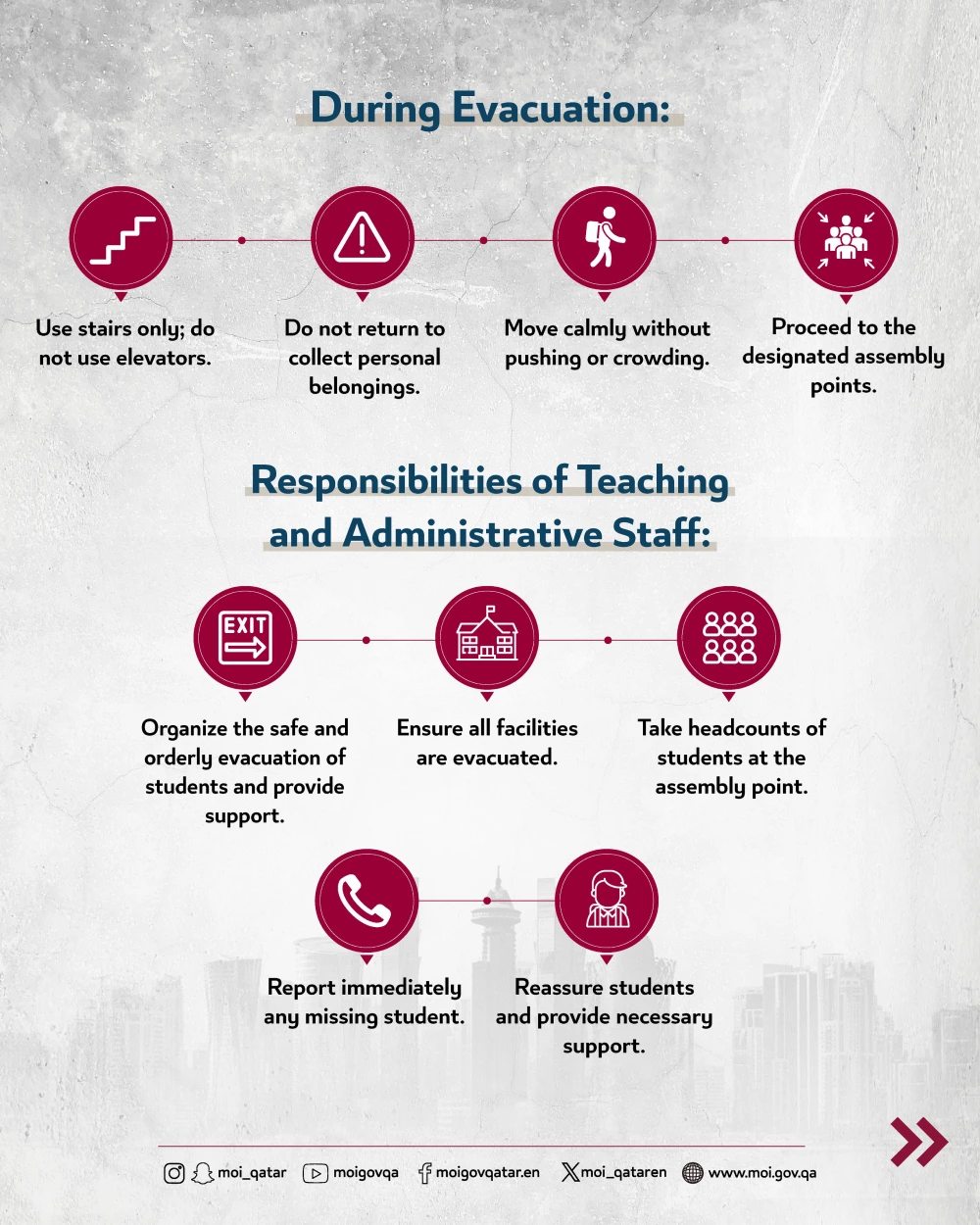
During Evacuation During evacuation: Use stairs only and do not use elevators. Do not return to collect personal belongings. Move calmly without pushing or crowding. Proceed directly to designated assembly points.
Responsibilities of Teaching and Administrative Staff Teaching and administrative staff are responsible for organizing safe and orderly evacuation, ensuring all facilities are evacuated, and conducting headcounts at assembly points. Any missing student must be reported immediately. Staff should also reassure students and provide necessary support.
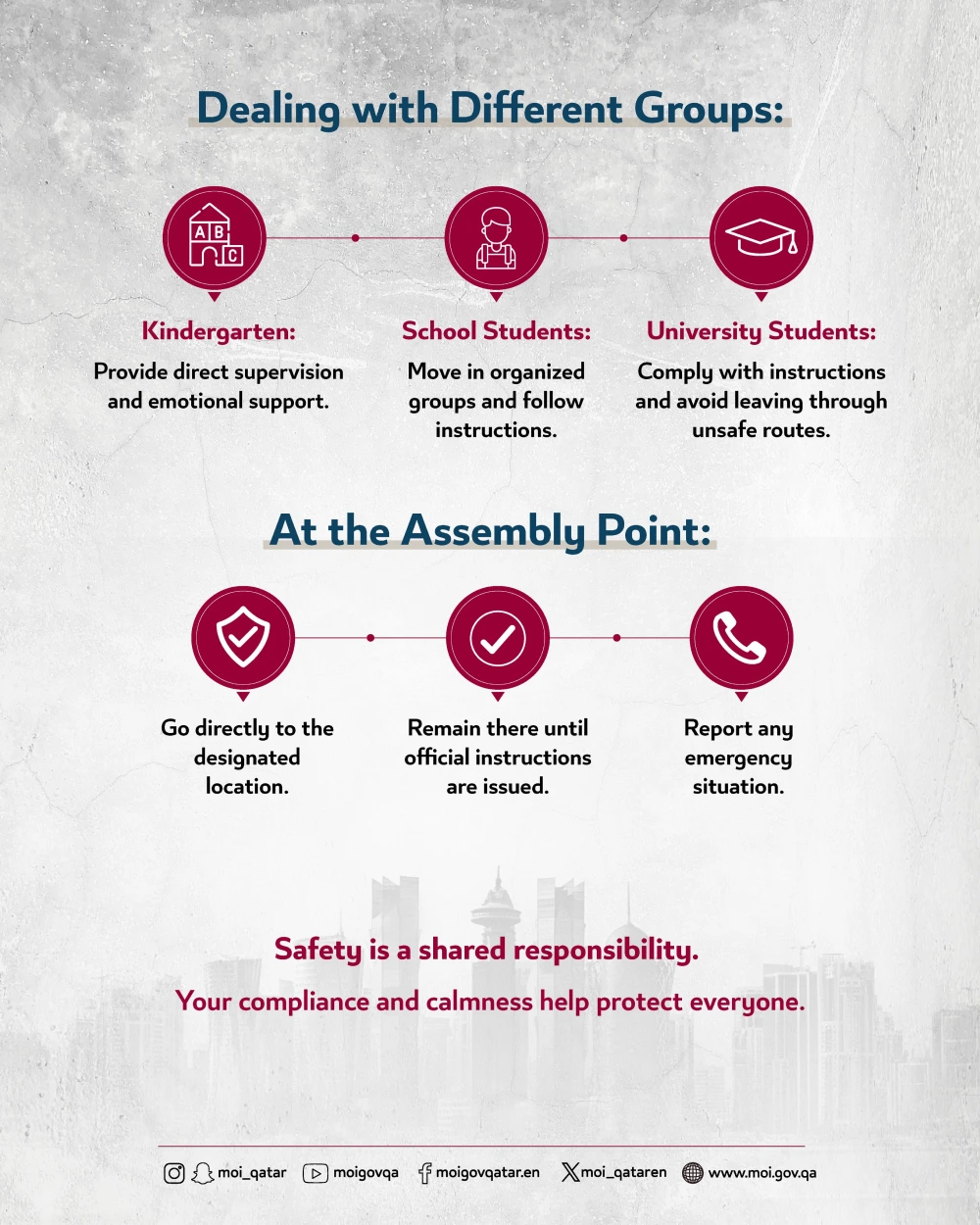
Dealing with Different Groups The guidelines highlight different procedures for different age groups: Kindergarten children should receive direct supervision and emotional support. School students should move in organized groups and follow instructions. University students must comply with instructions and avoid leaving through unsafe routes.
At the Assembly Point At the assembly point, students and staff should go directly to the designated location, remain there until official instructions are issued, and report any emergency situation if necessary.
The Ministry stressed that safety is a shared responsibility and that remaining calm and following instructions during emergencies helps protect everyone and ensures a safer educational environment.