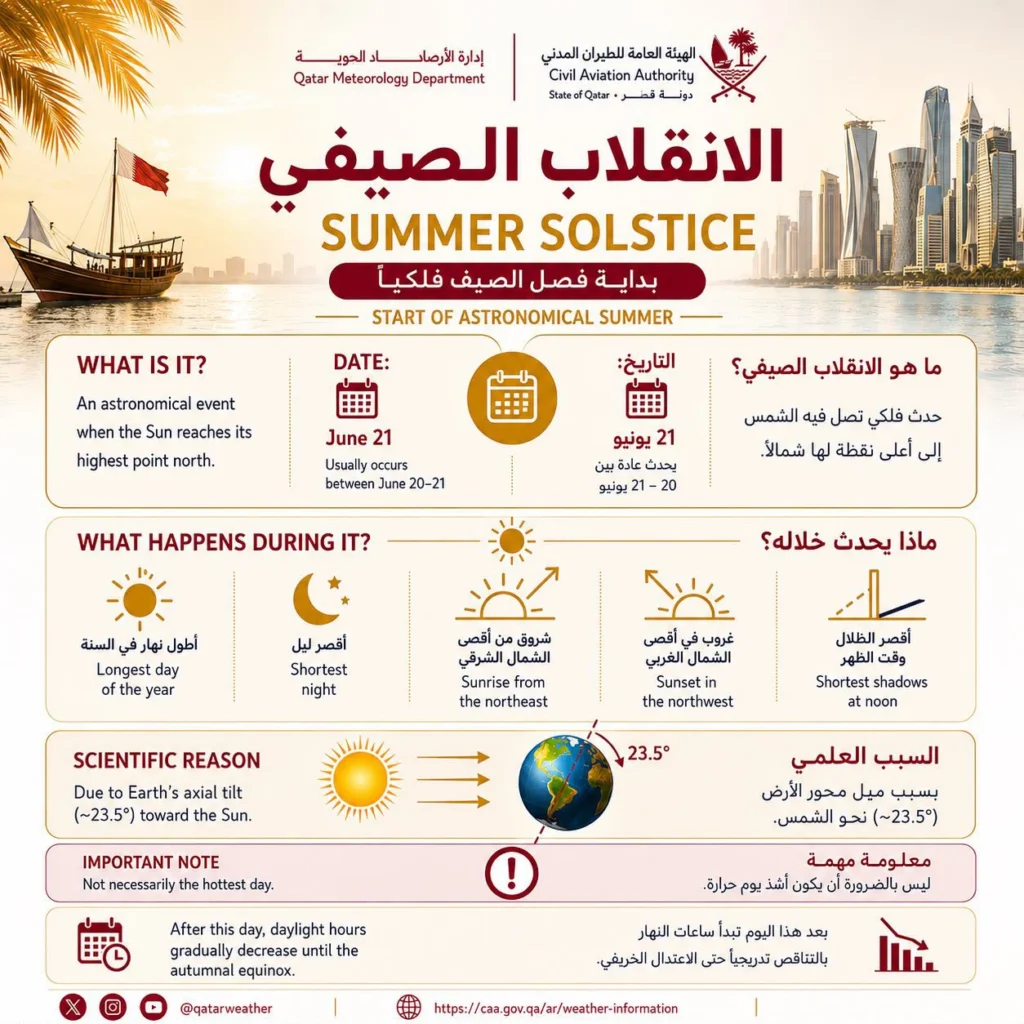
Today, June 21, marks the first day of astronomical summer and the occurrence of the summer solstice, bringing the longest period of daylight in the Northern Hemisphere.
According to the Qatar Meteorology Department, the summer solstice is an astronomical event that takes place when the Sun reaches its highest point north of the equator. It usually occurs between June 20 and 21 each year.
During this event, the Northern Hemisphere experiences the longest day and the shortest night of the year. The Sun rises from the northeast and sets in the northwest, while shadows are shortest around noon.
The phenomenon is caused by the Earth’s axial tilt of approximately 23.5 degrees toward the Sun. Despite the extended daylight hours, the summer solstice is not necessarily the hottest day of the year.
Following June 21, daylight hours will gradually begin to decrease until the arrival of the autumnal equinox later in the year.
The summer solstice marks the official beginning of astronomical summer and highlights one of the Earth’s most significant annual seasonal changes.